I read this piece by Matt Oliver – of “Among Trees” on Substack and loved it. The photography, also by Matt, is stunning, and the poem compliments both beautifully. He gave me his permission to share this with you.
_____________
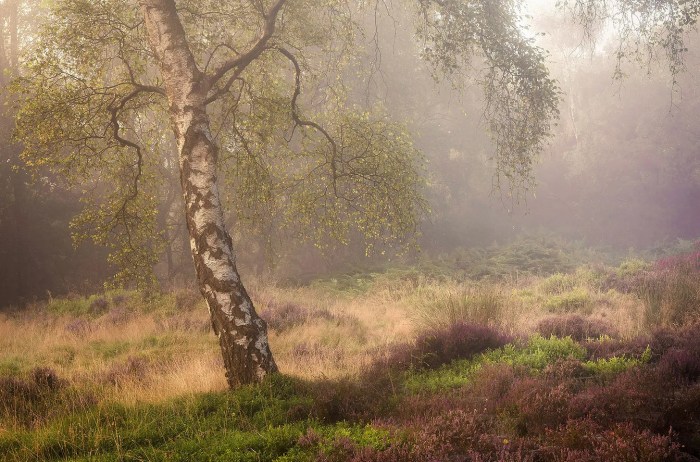
A place to ponder.
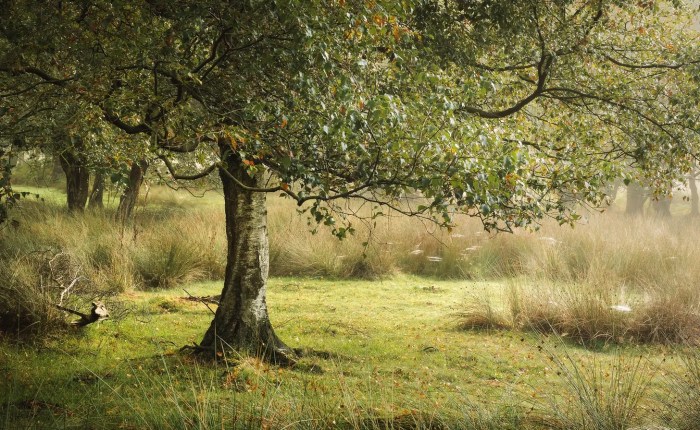
“Places like this hold a quiet stillness. A place to stop. To pause. To reflect. A simple tree. A lone subject. Ordinary, and yet remarkable.”
Underneath the Birch
Beneath the silver-latticed skin the morning gathers, pale and kind. Soft light sifts through trembling leaves and lays its hush upon the mind.
The world, in muted greens and golds, forgets its hurried, restless tone; here, even passing hours grow still and feel as gentle as her own.
I rest where quiet roots run deep, where shadows breathe and sunlight parts, a summer held in tender shade, and all my thoughts unlace their knots.
“What’s a place that makes you pause, even when you didn’t plan to?”
This is a reprint of a blog post by Shady – “Planet Positive” on Substack that moved me so much I had to share it with you.
“Librarian”
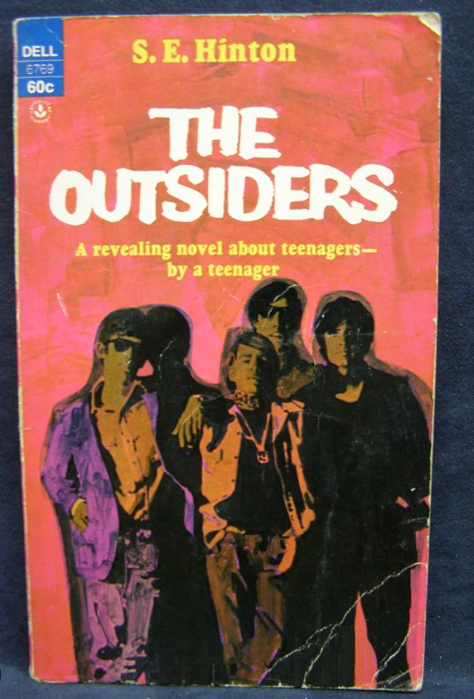
I’m a librarian. We close at 9 PM. But I stay until midnight doing inventory. Alone in the building. Last month I found a library card on the floor. Expired. 1987. Name on it: “Ethan Brooks, Age 12.” Thirty-seven years old. I almost threw it away. Then I saw what was written on the back. In a kid’s handwriting. “Return this when I’m somebody.” Couldn’t stop thinking about it. Who was Ethan Brooks? Did he become somebody? Did he ever come back? Looked him up in our system. Last checkout: June 1987. “The Outsiders” by S.E. Hinton. Never returned it. I did something weird. Searched his name online. Found him. Obituary. Ethan Brooks. Died three months ago. Age 49. Never married. No kids. Worked at a factory his whole life.
The obituary mentioned donations to our library. “In memory of the place that raised me when home couldn’t.” That broke me. This kid checked out one book. Wrote a promise to himself. Return this when I’m somebody. And thirty-seven years later he died thinking he never became somebody. But he was. He donated to us. The library that raised him. I had the card laminated. Put it in a frame. Hung it at the circulation desk. With a note: “Ethan Brooks never returned this card. But he returned to us in every donation he made. He was somebody. To every kid who’ll read a book because of his generosity. That’s who he became.” Didn’t think much would happen. I was wrong. People started leaving their old library cards. Hundreds of them. From the 70s. 80s. 90s. With notes about who they became. “I’m a teacher now.” “I’m a mom of three.” “I’m still trying.” We covered an entire wall. Called it “The Somebody Wall.” Because Ethan Brooks thought he wasn’t somebody. But he started something bigger than he ever knew.
A woman came in last week. Seventy years old. Walked straight to Ethan’s card. Stared at it for twenty minutes. I finally asked if she was okay. “I knew him,” she said. “I was his elementary school teacher. He used to come to the library because his home wasn’t safe. He’d read until closing. Every single day. I always wondered what happened to him.” She started crying. “I wrote him a note once. In a book I gave him. ‘You’re already somebody, Ethan. Don’t forget.’ He must not have believed me.” She pulled out her old library card. From 1985. When she was a young teacher. Added it to the wall. Wrote on the back: “I became a teacher because of kids like Ethan. He made me somebody too. We saved each other.” The Somebody Wall has 847 cards now. From people who thought they weren’t enough. Who thought their lives didn’t matter. Who worked factory jobs and raised kids and lived quiet lives and wondered if they were somebody. They were. They all were. Because Ethan Brooks left a library card on the floor with a promise he thought he never kept. But he did. He became exactly who he needed to be. Somebody who remembered where he came from. And made sure other kids would have what he had. A place that raises you when home can’t. That’s who he became. That’s who they all became.
I have been lucky to meet Bill, a fellow enjoyer of Substack lately. His writing and the photos he chooses to illustrate his thoughts really resonate with me. He gave me his permission to share one of his pieces with you!
“Be the one who adds more joy to the world than you take from it.
The one who notices—who offers warmth in small, quiet ways that ripple outward.
Joy doesn’t have to be loud or grand; sometimes it’s a gentle presence, a listening heart, a kindness given without an audience.
Be the one who chooses light even when the day is heavy.
Who understands that happiness can be planted—word by word, gesture by gesture—like seeds scattered along an ordinary path.
You may never see every bloom, but they will grow because you passed that way.
In a world that often rushes, be the pause that softens it.
Be the laughter that reminds others they are alive.
Be the reason a moment feels a little less lonely, a little more possible.
That is how joy survives—
because someone, somewhere, decided to be its keeper. 🌱”
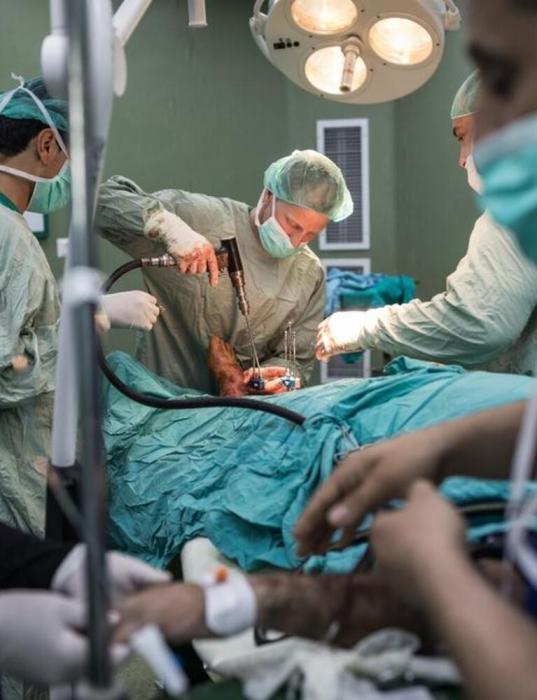
I found this article in my travels today. Ukraine is not just a news story that touches us for a moment and then gets lost in our daily lives. People – real people – are suffering and working in the middle of a war. This touched me so much I had tears in my eyes. May these people be blessed and the fighting stop.
____________________
“The heavy door to the staff lounge swings shut behind me, muting the familiar hospital sounds into a distant hum. I lean against it for a second, letting out a breath I feel like I’ve been holding for two hours. It’s done.
The boy is fourteen. His name is _____. He took a bad fall off his bike trying to avoid a pothole—a story as old as time, yet now forever tied to this specific pothole on a Kharkiv street. A displaced supracondylar fracture of the humerus. Nasty, but clean. In the OR, under the bright lights, it was just anatomy. A puzzle of bone fragments, vessels, and nerves that needed careful restoration. My hands moved with a practiced calm—reduction, temporary fixation, the precise placement of K-wires under the C-arm’s silent blue glow. Everything here, in this operating room, is fine. Controllable. Logical.
I pour a cup of lukewarm, strong tea from the ever-present pot. My body aches with the familiar fatigue of focused tension. Looking out the small window, the sky over Kyiv is a deep twilight blue. Peaceful. It’s a dissonant sight. My mind, still buzzing from the concentration of surgery, now fills with the other, louder reality.
I operated on a 14-year-old boy today. A simple childhood accident. But for a moment, when they wheeled him in, my heart clenched with a different, colder fear. It wasn’t the shape of the fracture that caused it; it was his age. Fourteen. The same age as the boy from Mariupol we treated last spring, brought in with a wound that was not from any bicycle. The age of the kids growing up too fast in basements, their childhoods measured in air raid sirens and the sound of distant impacts.
This is our duality now. We are orthopedic surgeons in Ukraine. We still treat the slipped discs, the arthritic knees, the sports injuries of ordinary life that stubbornly persist. We mend the simple fractures of boys being boys. But layered over that, like a persistent shadow, is the other medicine. The medicine of shrapnel, of blast injuries, of complex trauma from forces that have nothing to do with gravity or bad luck, and everything to do with war.
Today, I am grateful it was just a bike. Today, my skill was used to ensure _____ will have full function in his arm, to play, to write, to hug his mother without pain. A small, complete victory. In a few weeks, he’ll be complaining about physiotherapy, and I will scold him with a smile. A normal, beautiful thing.
I finish the tea, the bitterness sharp on my tongue. The pager on my hip is silent for now. I’ll go check on him in recovery soon, speak to his anxious parents with the confident, reassuring tone we’ve all mastered.
But first, I allow myself this minute of stillness by the window. I think of my colleagues in the East, in the cities closer to the front, where their ORs have no respite from that other kind of trauma. Their stamina is superhuman. We support them as we can, sending supplies, sharing complex case advice over secure chats.
Everything here, in this moment, is fine. The operation was a success. The city outside is quiet tonight. My hands, which just set a young bone straight, are steady.
I take another deep breath and square my shoulders. The fatigue is still there, but it’s a good fatigue. The kind that comes from fixing something that can be fixed. A small piece of the world, put right. In the morning, there will be more patients. Both kinds. We will be here for them all.”
This is a repost of an article by Larry Edge on Substack – @ldedge
Larry Edge
As a kid, I thought my grandmother was stingy. Whenever the family went out to eat—birthdays, holidays, lazy weekends—she’d smile softly and wave us off: “I’m not hungry, sweetheart. You all go enjoy.”
We’d push back, but she never budged. She stayed home, humming along to the radio in her small house that always smelled of tea and clean soap. I figured she just hated spending money.
I was wrong.
After she passed, a stranger walked in during the quiet reception at her house. Her eyes were swollen, and she held a folded photo of two children. She asked if we were Rosa’s family. When we said yes, she broke.
“Did you know,” she said through tears, “that she bought groceries for my kids every month for three years?”
The room froze. I looked at my mother, then my uncle—their faces echoed my shock.
Her name was Elena. She lived a few blocks away in a cramped apartment behind the church. Her husband had left when the children were small. Some nights, she skipped meals so her kids could eat. One day, Grandma had spotted her on a curb, cradling a crying baby beside a grocery bag that held only a loaf of bread and two apples.
Grandma didn’t pry. She just handed Elena an envelope with fifty dollars and a simple note: “Feed them. They deserve more.” That moment turned into a silent routine.
Every month, Grandma found quiet ways to help—groceries left on the porch, utility bills paid anonymously, small Christmas gifts slipped into the mailbox. All while insisting she “wasn’t hungry” when we invited her out.
We called it frugal. It was a sacrifice.
After the funeral, more stories surfaced. A man in a wheelchair remembered her weekly checkers games at the nursing home. A teenager told us she’d edited his college essay and given him Grandpa’s old briefcase as a “good-luck charm.”
Each memory peeled back another layer of the woman we thought we knew.
Sorting her things, we found small spiral notebooks—not diaries, just dates and short notes of unseen kindnesses. They felt like quiet reminders to her that care still counted.
One page held a list: “People to pray for when I can’t sleep.” My name was there. My father’s. Elena’s too.
I recalled getting upset once when she wouldn’t let me buy her new shoes—hers were worn through. I’d begged; she’d just smiled: “These still have more walking to do.” I’d rolled my eyes. Now I see.
She never took when she could give.
In the weeks that followed, I walked her old paths through the neighborhood. At the nursing home, they showed me “Rosa’s chair.” At the grocery store, a young clerk said she used to slip him ten dollars at closing and whisper, “You’re doing great. Keep going.” She made him feel visible.
Piece by piece, we uncovered the invisible world she’d woven—a network of kindness still supporting people even after she was gone.
Then my mother found a tin in the attic labeled “Rainy Day Fund.” Inside: $872 and a note. We debated its purpose.
Elena called. Her oldest had been accepted to community college, but the $870 registration fee was out of reach.
We didn’t hesitate. We sent the money. Days later, she arrived with a homemade pie and a card: “Thank you for finishing what she started.”
That evening, I sat on Grandma’s porch, watching the streetlights come on. For the first time, I felt her not in the emptiness, but in everything still moving.
The following Sunday, instead of brunch, I bought a sandwich for a man outside a café. He looked up, surprised, and smiled.
It felt small. But not small.
Months later, life hit hard. I lost my job. Rent loomed. Pride kept me silent. One morning, in a café, cold coffee in hand, rejection emails piling up, a young woman approached.
“Excuse me—are you Rosa’s grandson?”
I nodded, puzzled.
“She read to me at the library,” she said. “I knew your eyes.” Seeing my weariness, she handed me an envelope.
“She told me kindness is a seed. Plant it, and one day it grows back.”
Inside: a check for $1,000.
I tried to refuse. She smiled. “She said it was yours before you even knew it.”
That covered rent. Two weeks later, I landed a job. I sent her flowers with three words on the card: “Your seed bloomed.”
I used to think heroes shouted.
Now I know the real ones whisper. They fold laundry, stir soup, and tuck help into envelopes no one will ever credit.
Grandma didn’t chase thanks. She just saw people—and cared.
Now, when I spot someone struggling, I step in. I listen. I help. And I hear her soft voice: “That’s it, dear. Keep walking. These shoes still have more steps.”
If this touched you, maybe you’ve known someone like her. Or maybe you are her.
I received permission from R.G. Ryan, the author of this, to share it with you. It’s one of the most beautiful things I’ve ever read.
______________________
The first time I heard it, I was six.
I was standing on the third stair up—high enough to feel brave, low enough to run—when the house made a sound it had never made before.
Not a creak. Not a settling groan. A clatter. Bright and sudden, like something important had arrived and tried not to announce itself.
From the bedroom, my father muttered something about raccoons. My mother shifted under the covers. But I didn’t move. Because I knew what it was.
I leaned toward the living room, peering into the dark, and whispered what the poem had taught me. “A rose suchek ladder.”
Behind me, my mother’s sleepy voice floated down the hall. “What did you say, honey?”
“It’s the ladder,” I said.
“What ladder?”
“The rose suchek ladder,” I repeated patiently. “From the poem.”
She smiled in her voice. “Oh. You mean ‘there arose such a clatter.’”
That version sounded wrong in my mouth. Like a coat that didn’t quite fit.
“No,” I said, softly but firmly. “I mean the ladder.”
She didn’t argue. She never did on Christmas Eve. “Well,” she whispered, “come sit with me. If it’s a ladder, let’s listen together.”
So, we listened. And there it was again. Another careful clatter, followed by a hush so complete it felt like the house itself was holding its breath.
I knew then, with the quiet certainty only children have, that something had arrived.
Years passed. I learned the correct words. I learned to say them cleanly and properly. But I never forgot the other version. Because children don’t hear language the way adults do. They hear possibility first.
And sometimes—often, I think—they hear the truth before we train it out of them.
This year, it came back because of my grandchildren’s laughter.
They were all piled on the couch, wrapped in blankets, cocoa balanced dangerously on knees, watching that old Christmas movie where Santa falls off a roof and the world tilts just enough to let magic leak in.
Then the line came up. Twisted on purpose. “A Rose Suchek Ladder.”
They laughed and repeated it immediately, tasting the words. “A ROSE SUCHEK LADDER.” Saying it like it meant something.
And something in me—old and patient—sat up and listened.
Later, after everyone was in bed and the house had settled, I found myself alone with the Christmas lights glowing softly. I don’t know why I stayed up. Practical people usually don’t.
But Christmas bends practical people toward wonder whether they approve of it or not.
I was standing near the fireplace when I heard it. A clatter. Clear. Familiar.
Then another sound—lighter this time—like a rung being set carefully against brick.
My heart did something it hadn’t done in years. “A rose suchek ladder,” I whispered.
The air shifted. Not dramatically, not enough to convince a skeptic. Just enough to feel remembered. And, for a moment, I saw it. A ladder, yes but not wood or metal. Pale and delicate, as if braided from winter itself. Its rungs looked like rose stems, stripped of thorns, smoothed by patient hands.
And down it came—slowly, carefully—the shape of a man. Not the noisy version. Not the cartoon. Someone older than hurry. Someone who still treated the moment with reverence.
He stepped onto the hearth as gently as snowfall. He noticed me. I know he did. For a second, I expected to be scolded. Adults aren’t supposed to be here for this part.
Instead, he nodded. Not as a king to a subject but as a craftsman to someone who recognized the tools.
Then he lifted one finger to his lips. Not in warning but in invitation.
I didn’t speak. I didn’t move. I just stood there with my hand on the mantle, feeling my heart thump like a kid’s again.
Santa turned slightly, and I saw it then: the ladder wasn’t just for him. It was a way in and out of the thin places. The places where belief still mattered. The places where words could still become doors.
And I realized something that made my throat tighten: Adults don’t stop believing because the world proves them wrong. Adults stop believing because the world trains them to stop listening.
He moved quietly, leaving gifts where gifts belonged, the way someone tends a garden in the dark; without fanfare, without ownership.
When he returned to the fireplace, he placed a gloved hand on the ladder, respectful, careful. Before climbing, he glanced back once more, and though he never spoke, I understood.
Don’t explain this away.
Don’t steal it by trying to prove it.
Just keep the doorway open.
Then he climbed. The ladder shimmered and vanished, rung by rung. One pale rose petal drifted down and settled on the hearth.
Morning came the way it always does—noise, paper, joy in all directions at once.
Then my granddaughter stopped and pointed. “What’s that?”
I followed her finger. The petal was still there.
I picked it up gently. “That,” I said, smiling, “is proof the ladder was here.”
She leaned closer. “What ladder?”
I knelt so we were eye to eye and whispered the words the right way—the way that opens doors. “The rose suchek ladder.”
Her eyes lit up. And somewhere deep in the house, old and patient and listening—
there arose such a clatter.
Happy Christmas to all, and to all a good night.
R.G. Ryan
Christmas 2025
______________________
R. G. Ryan – R.G. Ryan is a novelist, musician, and essayist whose work explores the intersection of faith, culture, and human responsibility. A native of California’s Central Coast, he writes about the places—and the values—that shape us.
@rgryan on Stubstack and. @RGRyan777 on X
Author of the Jake Moriarity Series that I love and highly recommend.
In The Two Towers, Samwise Gamgee delivers one of the most powerful monologues in cinematic history. He tries to remind Frodo why they are on this long journey to destroy the One Ring by speaking of the great stories — the ones that really mattered. He explains that the people in those stories kept fighting because they were holding on to something. When Frodo asks him what they are holding on to, Sam picks him up off the ground and replies:
There’s some good in this world, Mr. Frodo, and it’s worth fighting for.
It’s been a difficult week, a tough month, and a challenging year when it comes to bad news. And yet, even in the midst of it all, these words linger in my mind, reminding me that the world is full of kind souls quietly doing good, helping one another, and keeping hope alive in ways we may never see. No matter how long or dark the night feels, the stars are still shining. Or, in the words of Samwise:
How could the world go back to the way it was when so much bad had happened? But in the end, it’s only a passing thing, this shadow. Even darkness must pass. A new day will come. And when the sun shines it will shine out the clearer.
Reminder: Beauty is truth is a reader-funded publication that relies entirely on your support. There are no ads here, just a passion for sharing beauty.
Upgrade your subscription for just a few dollars a month to help my mission and access members-only content
It’s remarkable how, no matter how dark it gets, the world always finds a way to shine again. Sometimes it begins with a single act — a small gesture of kindness, a work of art that touches someone’s soul, or a life saved by someone’s empathy. These moments ripple outward, reaching far beyond what the eye can see, brightening days, changing lives, and revealing the profound beauty of being human.
Here are five stories that remind us of that beauty, and the extraordinary ways humanity can shine…
1. Sebastião & Lélia Salgado: A Forest Born from Hope
There’s an old proverb that goes:
A society grows great when old men plant trees whose shade they know they will never sit in.
Many years ago, Sebastião Salgado, the legendary Brazilian photographer, returned to his family’s land in Minas Gerais only to find it ravaged. “The land was as sick as I was — everything was destroyed,” he said at a climate meeting.
“Only about 0.5% of the land was covered in trees. Then my wife had a fabulous idea to replant this forest. And when we began to do that, then all the insects and birds and fish returned and, thanks to this increase of the trees I, too, was reborn — this was the most important moment of my life.”
With his wife Lélia, he founded Instituto Terra in 1998 to replant native trees, restore watersheds, and rebuild biodiversity. Over decades, they planted more than 2 million trees, bringing back insects, mammals, and 173 different bird species.
Salgado once reflected:
Like to grow a baby, you need to teach it to walk, to speak, and then they can go to school on their own. Trees are the same. You need to hold them close for a while.
2. A Voice That Survived Death
Margaret McCollum lost her husband, actor Oswald Laurence, in 2007. His voice, however, lived on: Laurence had recorded the now‑famous “Mind the gap” announcement for the London Underground.
Years after his death, Margaret would return to Embankment station regularly just to hear him. When the recording was replaced during system upgrades, she wrote to Transport for London. Moved by her grief, TfL not only gave her a CD of the announcement but also brought back her husband’s voice at Embankment station, the one she regularly traveled through.
As she put it: “I love the fact that he’s back there … I can go and listen to him. It does bring him very close to me.”
3. Bill Murray: How a Painting Saved His Life
In a moment of despair early in his career, Bill Murray wandered into the Art Institute of Chicago and found himself before The Song of the Lark, an 1884 oil painting by Jules Breton.
He later recalled: “There was something about her face… it felt like she had been through something hard, and yet there was hope. If this girl in the painting can keep going, maybe I can too.”
That sudden epiphany — that another soul, painted in a field at sunrise, kept living despite hardship — gave him a reason to stay alive when he had none left. He later said: “It gave me some sort of feeling that I too am a person and get another chance every day the sun comes up.”
I want you to think of this story the next time you feel your art is futile or your creative pursuit isn’t worth the effort.
4. A Sanctuary for Stray Dogs
In Gravatá, Brazil, Father João Paulo Araujo Gomes saw stray dogs — vulnerable and abandoned — and opened his parish to them. Throughout the week, he cares for dozens of dogs in his rectory, and every Sunday he brings one to Mass, offering it a chance to find a loving home. Thanks to his compassion and dedication, many of these dogs have been adopted, finding safety and care they never had before.
His belief is deeply rooted: “They will always be able to enter, sleep, eat… for this house is of God and they are of God. Three of them stay with me. Today, they are my children and sleep in my bed.”
5. The Guardian of the Golden Gate
In 2005, Kevin Berthia stood on the edge of the Golden Gate Bridge. Officer Kevin Briggs, known for his work preventing suicides, approached him gently and said, “I’m not going to touch you… I just want to talk… and to listen.”
For 92 minutes, Briggs listened — not to fix, but to understand.
Berthia later reflected: “It was 92 minutes… and every one of those minutes it was me talking and him mostly listening.”
That moment didn’t just save Berthia’s life — it transformed it. Berthia went on to marry, raise a family, and dedicate his life to suicide prevention, saving countless lives in his own right.
Ten years later, he and Briggs met again on the same bridge, this time under far brighter circumstances:
Briggs has earned the nickname “Guardian of the Golden Gate” for having saved the lives of more than 200 people…
As Matthew McConaughey said in his 2014 Oscars acceptance speech:
It is a scientific fact that gratitude reciprocates.
It’s easy to feel overwhelmed and exhausted when our attention is consumed by bad news, outrage, and endless negative stimuli. Social media algorithms divide the world into toxic echo chambers, and those in power profit from keeping us at each other’s throats. In this environment, it’s all too easy to start seeing only the worst in the world — and in one another. And yet, beneath it all, there is still immense goodness, and countless people quietly making a positive difference every day.
It’s precisely because of this that I believe we should act as if what we do truly matters… because it does. The examples you’ve just read demonstrate it.
Throughout human history, we have a duty to resist evil and keep it at bay. But I believe our greater responsibility is to focus our energy on doing good — to move ourselves and those around us toward the light. The best way to defeat darkness is to build the world we want to see. Salgado did this through his work, planting trees in places where the land had been devastated and hope seemed lost. But hope is never truly lost… As Alexandre Dumas once said:
All human wisdom is summed up in two words: wait and hope.
My friend Marsha sent this to me this morning, saying her brother had sent it to her, and I smirked, snorted, and laughed all the way through it. I HAD to share –
As 2024 is gone:
I want to say thank you Facebook friends, for your educational posts over the past year. When it comes to common sense, I’m beginning to wonder if anyone has any. I am totally messed up now and have little chance of recovery. Because of y’all, I have to drink 3 glasses of wine. Yes before noon.
1- I can no longer open a bathroom door without using a paper towel.
2-Nor let the waitress put lemon slices in my Ice Tea without worrying about the bacteria on the lemon peel.
3- I can’t sit down on a hotel bedspread because I can only imagine what has happened to it since it was last washed.
4- I can’t eat a little snack that sends me on a guilt trip because I can only imagine how many gallons of trans fats I have consumed over the year.
5- I must send my special thanks for the post about rat *hit in the glue on envelopes because I now have to use a wet sponge with every Christmas card envelope that needs sealing.
6- I have to scrub the top of every can I open for the same reason.
7- I find it difficult to use cancer-causing deodorants even though I smell like *hit pot.
8-Because of your concern, I no longer drink Coca-Cola because it can remove toilet stains.
9- Thanks to you I have learned that my prayers only get answered if I tag seven of my friends and make a wish within five minutes.
I0- I no longer buy fuel without taking someone along to watch the car, so a serial killer doesn’t crawl in my back seat when I’m filling up.
11- I no longer use Cling Wrap in the microwave because it causes seven different types of cancer.
12- Thanks for letting me know I can’t boil a cup of water in the microwave anymore because it will blow up in my face, disfiguring me No more hot chocolate for me.
13- I no longer go to the cinema because when I sit down I’m invaded by bed bugs.
14- I no longer go to stores because someone will drug me with a perfume sample and rob me.
15- I no longer answer the phone because someone will ask me to dial a number for which I will get a huge phone bill with calls to Russia and Ukraine. As for a certain political party, I’m not sure which one will be using and investigating my number. I heard it on Facebook So I know it’s true.
16- If you don’t post this to your wall for 7 days and tag at least 7 people in the next 7 minutes, next year Santa Claus ain’t going to leave you a thing. I know because I saw it on Facebook So it’s got to be true.
P. S. I now keep my toothbrush and false teeth in the living room, because I was told that the air carries germs up to 5 feet from the toilet.
This little girl, having lost her hair again to chemotherapy, asked her mother to do her hair. The joy she felt when her mother placed a hair clip was priceless.
Little angel seeing beauty in everything despite what she is going through https://t.co/nX4inGYh4J



 creativeartworksblog