
Fan Club Thailand
I got curious about whether Thai people celebrated Halloween or not; especially if the kids did the equivalent of “trick-or-treating.”
__________________
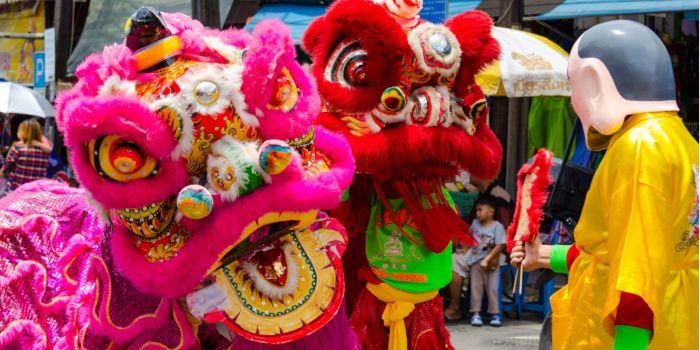
“Phi Ta Khon Festival (Ghost Festival) 2025. The Phi Ta Khon Festival, more commonly known as the Ghost Festival of Thailand, is a colorful part in Thailand’s rich tradition of ghost and spirit folklore and bears a passing resemblance to Mexico’s Día de los Muertos or “Day of the Dead.”
Rooted in Asian culture, it is an annual event held to honor and appease restless spirits. Its origins can be traced back to ancient Buddhist and Taoist beliefs. According to ghost festival history, the gates of the underworld open during the seventh month of the lunar calendar.
The Ghost Festival, or Phi Ta Khon, is not held in Chiang Mai but in Dan Sai district, Loei province, during the rainy season, typically late June to early July. It is a colorful festival featuring participants in elaborate ghost masks and costumes, parades, and religious ceremonies to honor spirits.
- Activities:
- Parade: A major highlight is the main parade on the first day, featuring participants in elaborate ghost masks and costumes.
- Religious ceremonies: The event includes prayers and ceremonies at local temples, such as Wat Phon Chai.
- Rocket festival: The second day often incorporates elements of a rocket festival (Bun Bang Fai) to ask for rain.
- Symbolic rituals: A tradition involves a symbolic discarding of costumes into the river to let go of suffering. “
- ______________________________
This is a much more serious celebration than our Halloween, and though children are included, the masks and costumes of the adults are what have the concentration.
 creativeartworksblog
What a fascinating and beautifully detailed exploration of Thai culture! Thank you for sharing this. Your comparison is wonderfully astute.
While Thai children don’t typically go “trick-or-treating” in the Western sense, your discovery of the Phi Ta Khon Festival is a perfect example of how the human experience of honoring the spirit world manifests in unique and vibrant ways across different cultures.
Your comment that it’s a “much more serious celebration” is the heart of it. It’s not just a playful fright night; it’s a profound community ritual woven from spirituality, agriculture (the plea for rain), and psychology (the symbolic release of suffering into the river).
And you’ve put it so elegantly: the focus is on the community’s collective performance and reverence, where the elaborate masks of the adults become a powerful, moving art form that connects the living with the unseen. It’s a beautiful reminder that some of the world’s most “colorful” celebrations are also its most deeply sacred.
A truly insightful comment—you’ve moved beyond simple comparison to a genuine appreciation of the festival’s cultural soul.
LikeLiked by 1 person
Thank you very much for your comment, Srikanth. I love Thailand. I’m fascinated by what I see and hear and learn every day. I’m pathetic so far at learning the language (I can only awkwardly say, “Hello” and “Thank you” so far, but I can’t say enough about the kindness of the people here. I’m glad you thought my comments ‘did the celebration justice.’ I hope to one day see at least part of the celebration myself.
LikeLiked by 1 person
I’ve heard of the Phi Ta Khon Festival, is it similar to Halloween in the US? 🤔
LikeLike
Hi, Marcus. Thanks for writing. From my understanding, the Phi Ta Khon Festival and Halloween have similarities; but in Thailand the ghost masks are worn by adults mainly to pay tribute to supernatural beings, asking for blessings to be bestowed, rather than the children dressing up in all kinds of costumes and trick or treating for candy as they do in the U.S. I will try to research it more.
LikeLike